
Bonine vs. Dramamine: Which is Better for Motion Sickness?
Key Aspects:
Both original Bonine and Dramamine are over-the-counter antihistamines and forms of motion sickness medication, but their active ingredients differ.
When it comes to Bonine vs. Dramamine, Dramamine is more likely to make you drowsy but typically kicks in faster, while Bonine lasts longer.
Other ways to reduce motion sickness include using acupressure bands, ginger/licorice, and light snacks.
There’s nothing worse than being motion sick on a cruise (okay, maybe there are some worse things that can happen on a cruise, but motion sickness is up there), especially if it’s your first cruise and you’re just slammed with a wave of nausea that you weren’t expecting.
You imagined yourself having fun in the sun, downing all those complimentary drinks, and lounging by the pool, and instead you’re holed up in your cabin with your head between your knees.
I don’t always suffer from it, but when motion sickness hits (like during rough seas), I’ll do anything to relieve the symptoms, and there are two primary OTC medications that cruisers reach for, to combat motion sickness symptoms: Bonine and Dramamine. While similar, they do differ in dosing, effectiveness and more. Here’s how to compare Bonine vs. Dramamine (original formulas) and how to choose which option is best for you.
What is Bonine?
Bonine’s active ingredient is meclizine. Taken before symptoms start, Bonine can prevent motion sickness symptoms for more than 12 hours, including nausea, dizziness and vomiting. Bonine typically does not cause drowsiness, but there’s no guarantee, unfortunately. You can take Bonine either on an empty stomach or with food, and take it every 24 hours for motion sickness.
Bonine is also sometimes used to treat symptoms of vertigo. You should not drink alcohol when taking Bonine.
Possible Bonine Side Effects
Side effects that you might experience after taking Bonine include:
Drowsiness or tiredness
Dry mouth
Headache
Vomiting
Who Should Not Use Bonine
Bonine is not intended for those under the age of 12. It’s advised that you check with a doctor before taking Bonine if you have or have had glaucoma, breathing problems, urination problems (including enlarged prostate), and liver or kidney disease.
It’s also not a great idea to use Bonine after recent use of alcohol, sedatives, or tranquilizers. Additionally, ask a doctor if you take any opioids, sleeping pills, muscle relaxers, or anxiety or seizure-related medications.
What is Dramamine?
Original-formula Dramamine’s active ingredient is dimenhydrinate. It’s used to treat motion sickness symptoms including nausea, vomiting and dizziness. Dramamine is a chewable tablet and it works best if taken 30–60 minutes before your cruise begins.
You cannot drink alcohol while taking Dramamine. Dramamine can be taken every four to six hours, as needed.
Possible Dramamine Side Effects
Drowsiness
Headache
Blurred vision
Tinnitus
Dryness of mouth
Lack of coordination
Palpitation
Dizziness
Hypotension
Trouble breathing or coughing
Painful or difficult urination
Who Should Not Use Dramamine
You should not use Dramamine if you have urination problems (including an enlarged prostate), breathing problems, or glaucoma. Avoid taking Dramamine if you also recently used alcohol, sedatives, or tranquilizers.
Just as is the case with Bonine, ask a doctor before using Dramamine if you take any opioids, sleeping pills, muscle relaxers, sedatives, tranquilizers or anxiety or seizure-related medications. Those over the age of 65 may also want to ask their doctor before using Dramamine.
Bonine vs. Dramamine: Which is Better?
Effectiveness
It’s generally the case that Dramamine works faster than Bonine, but Bonine offers longer-lasting symptom relief, and you won’t have to take it as often throughout the day. Both medications need to be taken before your cruise begins, for best results.
Chewable vs. Pill
Bonine is only available as a chewable table, while you can purchase Dramamine as a chewable tablet or as a pill.
Safety for Children
Another big difference between Bonine and Dramamine is who can actually take it. Bonine is not suitable for children under the age of 12. Dramamine, meanwhile, can be given to children aged 2 or older.
Side Effects
In terms of side effects and potential risks, both Bonine and Dramamine are pretty comparable, except when it comes to one specific side effect. Dramamine is notorious for making you drowsy. I can take Dramamine and be out like a light in half an hour.
As Dr. Natascha Tuznik, infectious disease specialist and associate clinical professor of medicine at UC Davis Medical Center, told NBC in a 2025 interview, regarding Dramamine, “Unfortunately, not much can be done to mitigate the side effects. If you’ve taken it before, you should expect similar side effects each time.” Tuznik confirmed with the publication, though, that Bonine was indeed “less likely to cause drowsiness.”
Cost
If you’re worried about cost, you can get both Bonine and Dramamine for $5–$10 at your typical grocery store. You can purchase these medications after you’re already on the ship, but remember that any necessities such as these are marked up considerably in the ship’s stores. Even if you just think you might need an anti-seasickness medication, go ahead and buy it before your cruise, rather than waiting.
Cruiser Reviews
As you’re deciding between Bonine vs. Dramamine, though, what do the actual people say?
An informal poll of cruisers on Reddit finds that many cruisers prefer Bonine, in part because it doesn’t make them as drowsy as Dramamine. Many use Bonine and take further measures as well, including wearing pressure point bands, eating ginger chews, taking Zofran (a prescription-only nausea medication), etc.
Alternatives to Taking Bonine or Dramamine on a Cruise
If you’re not ready to take Bonine or Dramamine just yet (maybe you’re worried about the side effects ruining your cruise or you don’t want to abstain from drinking during your vacation), you do have other options.
However, I’d advise that, if it’s side effects you’re worried about, just take a dose in advance of your cruise, to see how the medication affects you.
Otherwise, here are some of your other alternatives.
Choosing the Right Ship and Cabin
Simply booking the right ship and the right cabin on that ship can reduce your chances of experience motion sickness significantly. The motion sickness is caused by, obviously, the motion of the ship. You feel that motion more when you’re on a smaller ship, as well as when you’re closer to the ship’s sides and top.
As such, aim to book a bigger ship that provides more stability, as well as a cabin that’s toward the middle of the ship. Some also find that having a cabin with a balcony or ocean view can also be helpful, as looking at the horizon can alleviate some mild symptoms.
Natural Alternatives
There are a range of natural remedies for motion sickness that are worth trying out. While they may not work for everyone, they could very well work for you.
Try using an acupressure point bracelet; some cruisers report that they help relieve nausea. Eating candy or lozenges made out of ginger or licorice root is also reportedly a good option.
Simple Changes
If your symptoms are mild, you may be able to make very small changes to what you’re doing, to relieve a bit of the nausea.
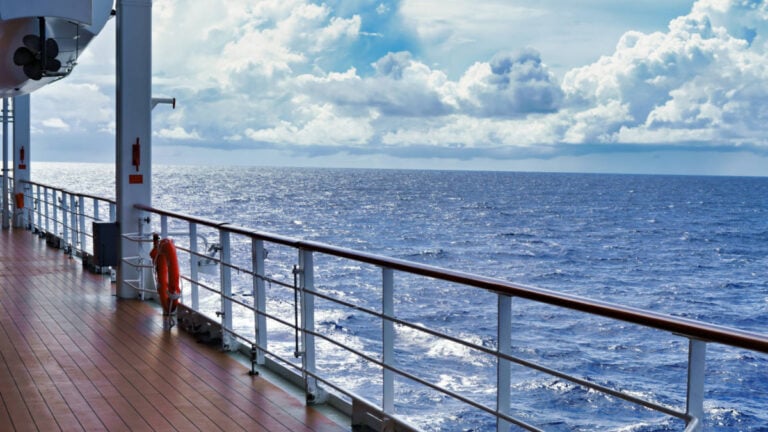
For example, get out onto your balcony or onto an outside deck where you can see the horizon, as well as get some deep breaths of fresh air.
You may find that you feel better standing up vs. laying down, or vice versa. You may want a stomach-settling drink or snack, such as something very light (crackers!) or cold water or soda. Using your phone can also make you feel worse, so try a distraction that’s not screen-based.
Just maybe don’t go to the infirmary unless you’re truly desperate. One Alaska cruise passenger racked up a $2,000-plus bill at their ship’s infirmary when visiting for sea sickness!
The above is not intended as health advice and you should always check with a pharmacist, doctor or similar professional before taking any new medicine.