
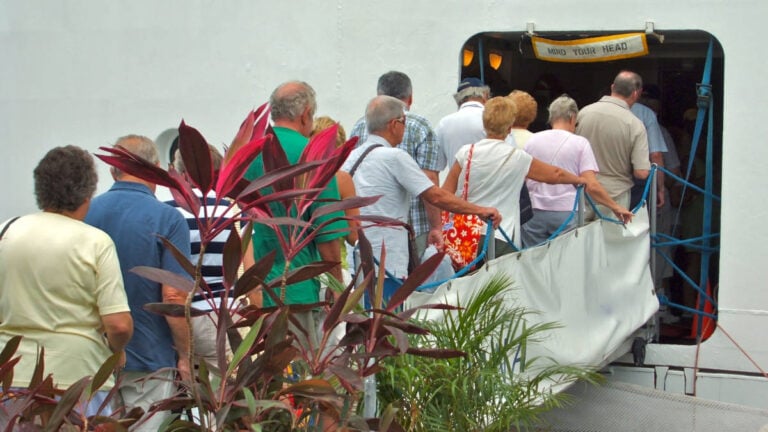
What Can You Bring Back on a Cruise Ship?
Whether returning from a cruise vacation or simply re-boarding following a stop at a port of call, many travelers wonder what they can bring back onboard.
While most souvenirs, specific volumes of alcohol, and some food items are allowed, other items, including fresh fruits, live plants, and animal products, are strictly prohibited.
To help you prepare for your cruise vacation, we will explore everything from customs regulations and commonly prohibited items to cruise line-specific policies. Guarantee your return to your cruise ship is hassle-free with this guide.
In This Article:
Understanding Customs Regulations for CruisesWhat Can I Bring Back on a Cruise Ship?Items Prohibited by Cruise ShipsCruise Line PoliciesTips for Shopping While on a CruiseThe Bottom Line on What You Bring on the Ship
Understanding Customs Regulations for Cruises
While cruise vacations offer a truly unique form of travel, cruise passengers still need to adhere to standard customs regulations that apply to all types of travelers, especially when it comes to knowing which items can be brought on the ship and back home.
This is particularly relevant when returning to the United States and other destinations like Canada and various European countries. For American cruise passengers, it is essential that all items that were purchased while abroad are declared.
This safeguard ensures that returning citizens have not exceeded federal purchase limits and duty-free allowances. As you would when entering the country via an airport, you must provide accurate and thorough information to customs agents upon request.
Failure to do so could put you in violation of federal laws and regulations, which could lead to steep fines and worse.
For example, American citizens are typically allowed to bring back up to $800 worth of goods from foreign countries without paying duty if they have been outside the United States for a minimum of 48 hours.
With that said, the value limits can vary depending on which country or countries have been visited during the trip.
Either way, failure to accurately declare what you have purchased and the value of those goods can put you in immediate violation of federally mandated customs regulations, which can lead to the seizure of the goods, steep fines, and, in serious cases, even jail time.
Beyond purchase limits, there are also specific categories of goods that have additional rules and regulations, like alcohol and tobacco, that were purchased abroad.
Alcohol and Tobacco Rules
In the United States, the duty-free allowance for alcohol purchased outside the country is a maximum per-person total of 1 liter (33.8 fl. oz.) of hard liquor and 200 cigarettes (which equals one carton) or 100 cigars.
If a person exceeded either of these totals when they re-entered the United States, they would be required to pay a duty fee of 3 percent of the value, as well as any domestic taxes that would be applicable.
Canadian citizens returning to Canada via a cruise ship must also abide by similar rules, but they have slightly more flexibility in regards to alcohol, with the option to bring back a total of 1.5 liters of wine, 1.14 liters of alcoholic spirits or a total volume of 8.5 liters of beer.
They are also allowed a total of 200 cigarettes or 50 cigars. Canadians can also claim goods with a total value of up to $800 CAN without paying duty and taxes, but this does not mean you can bring in extra alcohol or tobacco if you have not purchased other items.
Europeans returning to the European Union are also allowed 1 liter of spirits or 2 liters of wine if they have been outside the Union for 48 hours. Be aware that penalties for failing to declare items can lead to fines and confiscation of goods.
Additional Items with Specific Customs Regulations
Beyond the specific regulations for alcohol and tobacco, items like fresh fruits, vegetables, and animal products must be declared and can be restricted due to agricultural regulations.
This applies to American, Canadian, and European cruise passengers, as these rules were implemented to prevent the spread of invasive pests and various diseases that could impact crops and livestock.
Even souvenirs made from plant or animal materials, including seashells and coral found or purchased abroad, are often banned.
If your cruise vacation is taking you to some of the tropical beaches found in the Caribbean or along the coastlines of Mexico, you should definitely hesitate before you purchase any souvenir made from animal by-products, like turtle shells, shark teeth, coral, or even seashells.
What Can I Bring Back on a Cruise Ship?
Before we get into some of the items cruise lines ban, let’s look at some of the items you’re allowed to bring back on the ship.
Limited quantities of sealed, prepackaged, and non-perishable foods, like granola and protein bars, cookies, nuts, chips, popcorn, baby food and formula, instant ramen, candy bars, gummy snacks, and other similar items are all allowed.
These types of small snacks can be a good idea to stock up on, as it’s always nice to have something quick and easy to munch on in your room, especially if you’re looking to save a bit of money on your trip.
Quite a few passengers recommend protein bars for times between meals, and because they’re great to bring on excursions where you are unsure when you might get a chance to eat.
You are also allowed to bring back personal care items, including gels, creams, sunscreens, and toothpaste, but just make sure that these are sealed.
On embarkation day, you will be required to put them in a quart-sized zip-lock bag, but if you buy them in port, you can bring them on the ship if they are sealed.
With the exception of camouflage clothing during visits to the Bahamas, you are allowed to bring back any type of clothing on the ship. Whether it’s a souvenir T-shirt, a handmade dress, or even just a new hat, you can bring back whatever you would like. This includes sunglasses, purses, towels, and other accessories.
Prescription medications and sea sickness pills are all allowed to be brought back on the ship, but you will want to keep the prescription and make sure the medications are labeled. Over-the-counter medications, like Advil and Tylenol, are also safe to bring back if they are in their original packaging.
Read Also: Bonine vs. Dramamine – Which is Better for Motion Sickness?
Small handmade souvenirs are generally okay to bring back, just make sure they do not contain animal by-products, like shells, bones, and teeth. You can also bring back water, either in reusable bottles or disposable bottles, but they may be checked to make sure they do not contain alcohol.
You have a lot of flexibility when it comes to bringing stuff back on a cruise ship. Just make sure you avoid the prohibited items we will discuss below. If in doubt, always ask a representative from the ship, rather than trying to sneak something on and risk a fine.
Items Prohibited by Cruise Ships
Beyond the customs regulations that cruise passengers must abide by when they return to their home country, cruise ships have their own lists of prohibited items that passengers are not allowed to bring onboard, either at the original embarkation point or when returning to the ship after docking at a port of call.
These rules tend to vary from one cruise line to the next, as well as where the cruise ship has visited, but in general, the list includes the following:
Agricultural Products
For the most part, cruise lines work in tandem with customs regulators from their countries of origin, which is why they typically prevent passengers from bringing fruits, vegetables, live plants, and seeds onto the ship.
This helps ensure that the ship complies with customs and quarantine restrictions, both when the ship returns to its point of origin and in any other countries that will be visited along the ship’s voyage.
For example, carrying fresh fruit and vegetables from a nation in the Caribbean into the United States would not be allowed, but there are other situations where this would impact the cruise ship’s compliance with local regulations.
If, for example, a cruise itinerary involved visiting an island nation like Jamaica and then stopping at Cozumel, Mexico, any passengers bringing agricultural products on board in Jamaica could threaten the biodiversity and crop health when they visit Mexico.
To avoid these complications, just about every cruise line prohibits passengers from bringing agricultural products on board its ships.
Animal Products
Naturally, meat and other animal by-products are banned, as they fall into the category of agricultural products, but cruise lines also regularly restrict non-food items derived from animals, including shells, coral, and ivory.
Again, this helps cruise ships comply with local regulations, especially those that are governed by international law, such as the Convention on International Trade in Endangered Species (CITES).
While these rules may seem strict, most cruise lines do so to keep in good standing with the countries they frequent. Rather than risk violating import laws and causing complications with local authorities, the cruise lines simply have a blanket ban on these types of products.
For example, in 2022, the U.S. Fish and Wildlife Service found a single cruise passenger had brought back 509 prohibited aquatic items from the Western Caribbean, including corals, shells, and crab claws.
This action alone put the individual in violation of American import and export laws and led to the cruise line itself being investigated.
Read Also: Can You Fish off a Cruise Ship? (Or Take Fishing Gear)
In most cases, these rules apply to items purchased while in port that claim to be “customs friendly” due to aging, heat treatment, or polishing. In general, it is a good idea to avoid collecting or purchasing them altogether.
Illegal Drugs
Naturally, cruise ships departing from and returning to the United States abide by all federal regulations regarding illegal narcotics. No matter where the ship is registered, it will follow local laws in the destinations that it is going to visit, so bringing drugs on a cruise ship is strictly prohibited.
These rules apply even if the drug is legal in a passenger’s country of origin, which can be confusing for some travelers.
For example, medical marijuana and CBD may be legal in Canada, but a Canadian passenger traveling on a cruise ship that departs from the United States would not be permitted to bring that substance on board, even if they had a valid prescription from Canada.
Prescription drugs are generally allowed, but make sure you have the necessary documentation to show that it is medication.
Alcohol
While there are rules for bringing alcohol into countries, most cruise lines also have their own strict rules regarding alcohol.
Passengers are typically not allowed to bring more than one sealed bottle of wine or champagne onboard, and other forms of alcohol, like spirits and beer, are usually confiscated until the end of the trip.
If, for example, you purchased a bottle of rum while visiting a Caribbean port of call, you could have that bottle checked by a crew member until you returned to your final debarkation port.
Alcohol rules are so strict that security has the right to inspect containers, like mouthwash bottles, to ensure they are not filled with alcohol. On some cruises, not only would the alcohol be confiscated, but you could be charged a fine if you were caught sneaking it onto the ship.
Perishable Goods
Bringing fresh food, such as meats, fish (even if caught during an excursion), dairy, or baked goods onto the ship after shore excursions is usually not allowed.
While it may seem overly strict, this ensures that the ship complies with local quarantine and import laws. You can bring non-perishable, prepackaged food in reasonable quantities, like chips, granola bars, sealed cookies, and other snacks, as well as 12 standard 17 oz cans of non-alcoholic beverages.
Milk and formula for infants are generally permitted, but it is a good idea to have the original packaging accessible when you board.
Electronics and High-Power Devices
Many cruise lines prohibit using high-power devices such as heating elements, irons, kettles, and even some of the larger and more powerful speakers.
This is because their lithium batteries and power cords can pose a potential safety risk while onboard. Loud electronics can also be seen as a nuisance to other guests.
Worth Reading: Royal Caribbean Cracks Down on Bluetooth Speakers
That said, each cruise line has its own set of rules and guidelines for personal items that are prohibited, so it is always a good idea to check the specific policies of the cruise line you are traveling with before you set sail.
Other Items
Other prohibited items you should avoid packing include fireworks, ammunition, knives (including dive knives), drones, compressed gas cylinders and dive tanks, candles, incense, hot plates, non-mobility scooters, hookahs, handcuffs, and more.
As always, checking your cruise line’s specific policies before you start packing is a good practice, as this will ensure a stress-free boarding process.
Cruise Line Policies
While there are some general rules, each cruise line will have its own policies for what guests can bring onto their ships. While you should always check ahead to make sure you are compliant, here is a basic overview of some of the major cruise line policies:
Royal Caribbean
Royal Caribbean Group has a list of prohibited items for all cruise ships in their fleet, including those belonging to Royal Caribbean, Celebrity Cruises, and Silversea Cruises.
While guests of legal drinking age are allowed to bring one sealed 750 ml bottle of wine or champagne, all other types of alcohol, including alcohol purchased in a port of call, must be stored by the ship.
The list of items Royal Caribbean prohibits onboard their ships is pretty standard. It includes all illegal drugs, firearms, and replica weapons, any form of explosives (including fireworks), flammable items, knives and scissors, disabling chemicals, extension cords, and power strips, and any type of HAM radio or transmitting device.
There are a few items that are easy to overlook. For starters, all types of camouflage and military apparel is prohibited when visiting Barbados, as this violates local laws.
Sporting goods, like golf clubs and roller skates, can be brought on the ship but must be stored in the stateroom.
For a more detailed overview of the rules, consult Royal Caribbean’s list of prohibited items.
Norwegian Cruise Line (NCL)
NCL also permits one sealed bottle of wine per person. Like Royal Caribbean, they’ll confiscate any other types of alcohol until the final disembarkation point. Other prohibited items are fairly standard, but a few minor exceptions exist.
For example, unlike some other cruise lines, NCL does allow powered personal grooming devices, like hard dryers, electric shavers, steamers, and curling irons. However, these devices are subject to inspection and removal by the ship’s security.
If they are confiscated, they can be retrieved on the final day of the voyage. NCL also prohibits any type of door decoration, even if they are just basic magnets and stickers. They also recently made exceptions for small powered fans, which were previously prohibited.
For a more detailed list, check out Norwegian Cruise Line’s Prohibited Items List.
Carnival Cruise Line
Carnival and its subsidiaries, like Holland America Line and Princess Cruises, have the same rules and regulations as the other cruise lines.
With that said, they have unique policies regarding items that can be used for “port use” only, including drones, fishing rods, metal detectors, kites, floatation devices, beach tents, and more.
Unlike other cruise lines, which tend to prohibit these items entirely, Carnival allows guests to check these items and use them off the ship while in port. Guests are responsible for checking these items; otherwise, they can be fully confiscated.
For more details, take a look at Carnival Cruise Line’s list of prohibited items and exemptions.
Tips for Shopping While on a Cruise
With so many cruise voyages involving numerous stops to exciting destinations, stocking up on souvenirs while in port seems like an obvious decision.
While you can undoubtedly enjoy shopping while on your cruise vacation, focusing on non-perishable souvenirs is always a good idea to remain compliant with your cruise line’s regulations.
This is why clothing, jewelry, and handmade crafts not constructed from animal products are a good idea. You also need to keep the $800 limit in mind for when you return to your home country if you want to avoid paying duty and taxes.
Worth Reading: What Passengers Should Never Do Near a Cruise Ship
While it’s not always possible when purchasing from small kiosks and vendors, try to obtain a receipt to verify the value of your goods quickly.
If you plan on doing duty-free shopping, remember that many cruise ships have their own duty-free shops, which can be cheaper than some of those found in the ports.
Keep in mind that you will still have to declare these items when you return home, so you’ll want to keep that $800 limit in mind.
Plenty of cruise passengers report being heavily persuaded and borderline harassed by local vendors and sales representatives at tax and duty free shops to buy items, even when they won’t be able to bring them on the ship.
From pushy sales reps trying to get you to buy large bottles of alcohol before you get to the gangway, to local vendors trying to upsell you on their goods, just remember that you don’t have to say yes!
Packaging all fragile items safely and securely is also a good idea. You don’t want delicate glassware and ceramics you purchased while visiting a port to get damaged when you leave the ship. You should also keep the alcohol limits in mind when purchasing anything during a visit to a port of call.
Read Also: 11 Cruise Port Pitfalls That You Really Should Avoid
While it can be tempting to load up on local spirits, you won’t be able to drink them on board the ship, and you also will have to declare them when you return home.
Just scrolling social media, you can see plenty of videos of passengers trying to open bottles of alcohol in port so they can drink them before getting on board or try to smuggle them on the ship.
The Bottom Line on What You Bring on the Ship
While it may sound complicated, knowing what you can bring back on a cruise ship just involves doing some homework before you set sail. Just keep in mind the specific policies for the cruise line you are traveling with and the regulations for where you are returning to.
While there’s no reason to think you can’t purchase souvenirs and mementos from your vacation, following the rules and declaring these items honestly is the best way to avoid fees, fines, or other complications.