
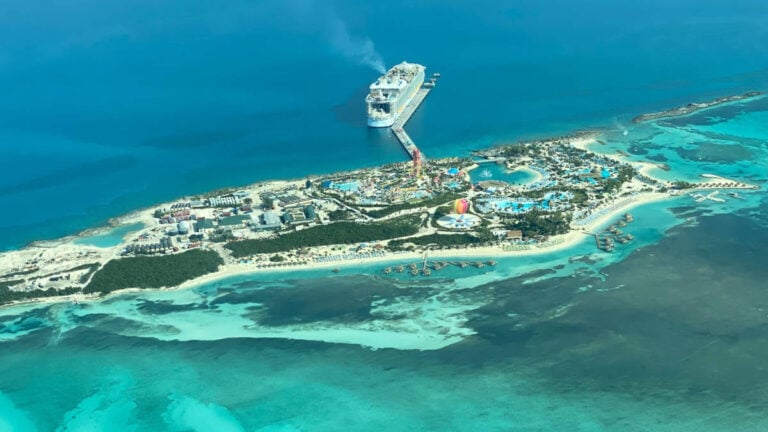
Bahamas Launches Tax Crackdown on Private Cruise Destinations
Cruise lines with private islands in The Bahamas will soon face tighter tax scrutiny as the government rolls out new compliance measures aimed at increasing revenue.
Prime Minister Philip Davis KC unveiled a new initiative on May 28, 2025, as part of the 2025-2026 Budget, calling the move essential to ensuring “fairness and equity.”
The Prime Minister said the tax contribution from cruise operators has not kept pace with their growing footprint, particularly at private island destinations that cater to millions of passengers annually.
“In 2024 alone, cruise visitors numbered 9.4 million – an increase of 20.3 percent over the previous year and representing a staggering 83.4 percent of total tourist arrivals. These numbers are not just impressive; they are transformative,” Davis told local media.
However, he also pointed out that while cruise volumes have soared, contributions to government revenue have “not kept pace.”
“We’ve seen exponential growth in private cruise destinations, where premium onshore activities like cabana rentals now fetch as much as $4,000 per day, yet these earnings often flow offshore with limited benefit to the Bahamian taxpayer,” said Davis.
Government officials are now in discussions with cruise lines regarding taxes on all imports to their destinations, all services provided to guests, “watercraft” activities being reserved for Bahamians, Customs duty enforcement, and “the payment of work permit fees for expatriate employees.”
Cruise lines don’t own land in The Bahamas; instead they use it through long-term leases with the government. These leases include specific rules the cruise lines must follow, and if they don’t, the government can take the land back.
Read Also: What Are All the Cruise Line Private Islands and Destinations?
But the government can’t just add new rules to those agreements unless the cruise lines agree to them.
Davis said cruise lines agree with the Bahamian principles and requests and have promised to work with the government to ensure they are meeting requirements.
As a result, Davis anticipates that revenue from private cruise destinations will be the nation’s largest GDP growth driver over the next 3 to 5 years.
That number includes revenue following the upcoming grand opening of Carnival Cruise Line’s $600-million Celebration Key in July 2025 and Royal Caribbean’s brand-new $110-million Paradise Island Beach Club in December 2025.
Destinations Draw Millions
Several major cruise lines operate exclusive private destinations in The Bahamas and will now face heightened regulatory oversight under the government’s new tax compliance initiative.
Designed as self-contained, resort-style experiences, they host millions of visitors each year.
Royal Caribbean’s Perfect Day at CocoCay, located in the Berry Islands, is one of the most prominent of these destinations.
With attractions such as a waterpark, beach club, and helium balloon ride, the island welcomed over 3 million visitors in 2024, making it one of the busiest private ports in the region.
Not far from there, Norwegian Cruise Line operates Great Stirrup Cay, a 250-acre island offering zip lines, snorkeling, and a swim-up bar. That property attracts around 400,000 guests each year and is currently undergoing a $150 million multi-ship pier upgrade.
Carnival Corporation has long maintained a presence with Half Moon Cay, a beach getaway located on Little San Salvador Island, which is shared between Carnival Cruise Line and Holland America Line.
Nearby on Eleuthera, Princess Cruises, also owned by Carnival Corporation, operates Princess Cays, featuring a mix of water sports and local craft markets.
Disney Cruise Line’s Castaway Cay, located near Great Abaco Island, is another key player in the region, particularly for family-focused itineraries with Disney character meet-and-greets.
It was joined in 2024 by a second Disney-themed destination, Disney Lookout Cay at Lighthouse Point on Eleuthera.
Meanwhile, MSC Cruises’ Ocean Cay MSC Marine Reserve in the Bimini chain emphasizes eco-tourism and marine conservation, recently opening a coral reef restoration center on the island.
Carnival’s new Celebration Key, located on Grand Bahama, is projected to handle up to 2 million guests per year.
Bahamas Launches Tax Crackdown on Private Cruise Destinations