
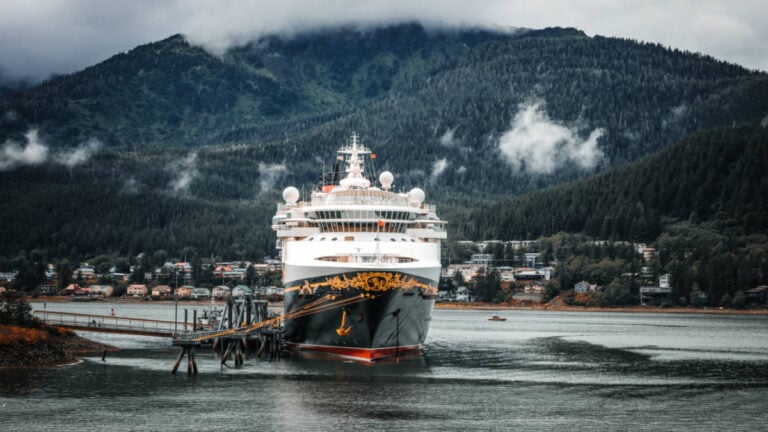
Juneau to Nearly Double Cruise Dockage Fees in 2026
It’s about to become more expensive for cruise ships to dock in Juneau, Alaska. And, eventually, more expensive for passengers.
On May 19, 2025, the Juneau Assembly unanimously approved an increase in dockage fees, aiming to bring public port charges in line with those at privately operated docks in Southeast Alaska.
“We’ve been talking about it for a few years,” Juneau Visitor Industry Director Alix Pierce told local media, referring to the cruise lines’ awareness of the impending fee hike. “They’ve known that it’s coming.”
Indeed, in April 2024, Cruise Hive reported on Juneau’s plan to collect millions of dollars in passenger fees from cruisers annually via a port fee increase.
However, the fees are controlled via an agreement with Cruise Lines International Association Alaska (CLIA Alaska) following a 2019 settlement between the Juneau Assembly and the organization.
At that time, CLIA Alaska objected to the port fees, saying Juneau’s plans were falling out of line with the original settlement.
Now, a year later, the city has found a way around the agreement and is raising dockage fees.
Instead of charging fees based on the tonnage of each ship that arrives and its length, the rates will now be based on each vessel’s passenger capacity.
The city expects to raise $5 million in fees annually with the change.
New Fee Structure
The new dockage fees will be under less restrictions than the previous fee program under the 2019 CLIA Alaska agreement, and will not limit the city to using fee revenue towards its tourism industry.
As Juneau operates two of the city’s four cruise ship docks near Marine Park, Pierce said the new model will bring its municipal rates closer to what private operators charge.
Read Also: Juneau Cruise Port, Alaska – Overview and Guide
“We know that our rates are definitely low compared to the private docks here and other ports in the region are also looking at their fee structure,” she said.
In addition to the dockage fee changes, Juneau’s cruise ship passenger fee program remains a major funding mechanism for tourism-related improvements.
The city collects three types of passenger fees: a $5 Marine Passenger Fee (MPF), a $3 Port Development Fee (PDF), and a $5 portion of the state’s $34.50 Commercial Passenger Vessel Excise Tax.
With 1.65 million cruise visitors forecasted in 2026, Juneau anticipates collecting $21.45 million in passenger-related revenue.
Under the 2019 settlement agreement with CLIA Alaska, the use of MPF funds is tightly controlled and tied to mapped zones within the city.
Projects within the core port area are generally approved without issue, while proposals outside of the port require additional consultation with CLIA.
In 2026, Juneau plans to spend more than $22 million in passenger-related funds. Major proposed expenditures include $3 million for expanding shore power, $2.5 million to complete Marine Park improvements, and $2 million for the next phase of the Seawalk.
As the city aims to bring in more revenue from Alaska’s popular cruise tourism – which continues to grow year over year – some residents of Juneau have been fighting hard to limit the number of cruise ships allowed to pull into port.
Proponents of the initiative want to cap daily visitors at 16,000 passengers and no more than five large cruise ships a day. They also want Juneau to set an annual limit at 1.5 million cruise passengers a year.
In 2023, the city welcomed 1.6 million cruise guests and then 1.68 million in 2024.
However, Juneau needed 2,720 signatures to move the proposal to legislation but failed to do so by the May 19, 2025, deadline.
As the debate continues, Royal Caribbean is in the process of sidestepping the port altogether by building a new port on Douglas Island, just opposite of Juneau. That port will not be subject to the city’s new port fees.