
What Does a Cruise Ship Pilot Do?
A cruise ship pilot is a highly skilled maritime professional responsible for guiding cruise ships into and out of port and through other congested waterways, like canals, river mouths, and more.
Let’s discuss what they do, their specialized skills and knowledge, and why they have such an important job.
In This Article:
What Is a Cruise Ship Pilot?Responsibilities of a Cruise Ship PilotChallenges Faced by Cruise Ship PilotsHow Does a Ship Pilot Get on a Cruise Ship?Guiding a Cruise Ship into PortCruise Ship Pilot vs Captain: Who Has Seniority?How to Become a Cruise Ship PilotCruise Ship Pilot Salary and HoursCruise Ship Pilot: A Crucial Role
What Is a Cruise Ship Pilot?
A cruise ship pilot, also called a maritime pilot or harbor pilot, is a highly specialized maritime professional given the important task of guiding large passenger vessels into port.
It may sound like a fairly straightforward role, but cruise ship pilots need to have an incredible understanding of these enormous vessels, the harbors and other waterways where they work, and skills that they have honed with many years of experience.
It’s an incredibly intricate job that requires calm nerves and truly specialized knowledge.
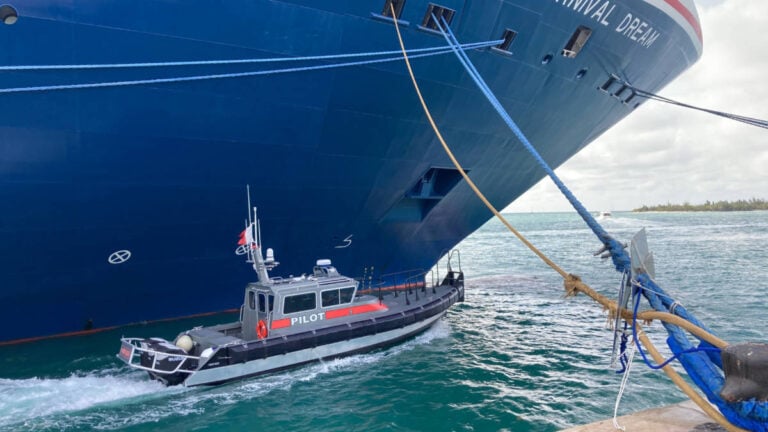
But what do cruise ship pilots actually do? As for how they actually guide cruise ships, they board a cruise ship by taking a pilot boat out to meet it outside of the port.
Once they reach the ship, they board and instruct the captain and crew to steer the ship. In some cases, they even assume temporary control of the vessel and work in tandem with the ship’s captain and navigation crew to actively steer it.
Since cruise ships are enormous and ports can be tight, these specialists help ensure the safety of the ship and all of the passengers and crew it is carrying.
To steer the ship safely, they need to understand everything about the port, including local weather conditions, water depths, tides, daily ship schedules, and any potential hazards in the area.
Their job is to ensure that the ship navigates safely past obstacles like breakwaters and other obstructions while keeping the ship at a safe speed.
Responsibilities of a Cruise Ship Pilot
Just saying that cruise ship pilots help guide cruise ships in and out of port would minimize all of the work they do. The truth is, they fulfill an extremely complex role that covers a huge range of responsibilities.
Let’s break down each of the key aspects of their job in detail, so you can appreciate just how much they are responsible for.
Guiding the Ship from Start to Finish
Beyond more overarching responsibilities, cruise ship pilots have a huge list of tasks they must complete each and every time a vessel they are tasked with guiding comes into port. This actually begins way before the vessel even approaches the port or waterway.
After being notified that the ship is arriving, they start with a comprehensive pre-arrival briefing, meticulously reviewing the ship’s schedule, weather forecasts, tidal information, and any potential hazards along the route.
As the ship comes within range, the pilot establishes direct communication with the ship’s crew and officers, which helps set the stage for a smooth transition.
Boarding the vessel via a pilot ladder from their own pilot boats, cruise ship pilots must assess the onboard conditions as quickly as possible, ensuring they clearly understand the current situation.
Once onboard, the pilot assumes full navigational command, setting the proper course and executing necessary alterations as the vessel nears the port. As they do so, the pilot works closely with the ship’s licensed deck officer and other members of the navigation crew.
Worth Reading: Docking a Cruise Ship – How Is It Done?
In addition to working with the ship’s crew, they maintain constant coordination with local coast guard and harbor officials to ensure a seamless approach to the designated berth.
In the final maneuvers, the pilot carefully guides the ship into its assigned dock, verifying that all parameters, like water depths and tidal movements, are optimal for a safe arrival.
After securely docking the vessel, the pilot conducts a thorough post-arrival review with the ship’s crew, offering feedback and discussing any challenges faced during the operation.
Cruise ship pilots need to be flexible, making necessary course alterations as the situation demands. From aligning the ship with its designated berth spot when it’s time to dock, to helping the ship leave port without delays, their job requires a lot of quick thinking.
It’s also not enough just to dock the ship; they also have to ensure it’s positioned optimally for unloading and boarding passengers and restocking supplies.
When the cruise ship is ready to leave the port, they remain on the ship and help guide it out of the harbor. A cruise ship pilot’s partner follows in a pilot boat, so the pilot can climb down and return to port after the ship has been safely navigated to open water.
Coordinating and Communicating
Maintaining effective communication procedures is essential to any cruise ship pilot’s job. Once the cruise ship pilot has boarded the vessel, they establish a clear line of communication with the ship’s crew and ship’s officers, as well as with port authorities and even the local coast guard.
This communication is incredibly important when it comes to coordinating maneuvers and safety timing movements of the ship.
In a sense, the pilot acts as a vital link between the cruise ship and the port itself. Through consistent updates and clear instructions, the pilot ensures that everyone involved in the operation is aware of the ship’s status and upcoming maneuvers.
Ensuring Safety and Managing Risks
For any cruise ship pilot, the safety of the ship is paramount. This means they must constantly assess, identify, and mitigate potential hazards.
Another critical safety responsibility is managing pilot transfers. If you’ve ever seen videos of cruise ship pilots boarding cruise ships, you know it can be a pretty dangerous job.
From pulling their pilot boat alongside a massive cruise ship to using a pilot ladder to board and disembark a cruise ship quickly, it’s a dangerous part of the job that requires quick thinking and focus.
Any mistakes or missteps could compromise the pilot’s safety and interfere with the ship’s safety.
Monitoring and Adapting to Dynamic Conditions
Cruise ship pilots are constantly monitoring the environment to anticipate any challenges that may arise. They rely on their deep understanding of local geography and experience with various hazards to make rapid decisions.
Whether adjusting the ship’s speed to maintain an optimal rate of reverse thrust or altering the approach based on shifting weather conditions, these decisions are made in real-time to ensure that the vessel remains on a safe trajectory.
Read Also: What Is the Helm of a Ship?
Pilots must also be adept at reading maritime signals and instrumentation. They interpret data from radar, sonar, and other navigational aids to determine the best route for the ship.
This technological proficiency and hands-on experience enable the pilot to navigate despite poor visibility or heavy traffic near the dock.
Challenges Faced by Cruise Ship Pilots
Even though cruise ship pilots are required to have the required skills to complete their job safely and efficiently, it’s also a job that involves ever-changing challenges. These are just a few of the challenges that these highly skilled professionals encounter:
Navigating Unpredictable Weather and Waterways
One of the most significant challenges is dealing with ever-changing weather conditions. Pilots must constantly adapt to variations in wind, rain, and fog, which can dramatically alter visibility and water conditions.
Storms and even the natural rhythm of tides can create dangerous scenarios if they are not taken into consideration.
Other environmental factors, like current movements and how the water reacts to breakwaters, need planning. This is why a thorough understanding of the area and waterway is essential.
Accounting for Complex Port Environments and Traffic
Another major challenge is maneuvering through busy harbors and canals. Cruise ports aren’t just busy with other cruise liners, many are located within larger port structures, so pilots need to anticipate the movements of cargo ships, local ferries, and even small pleasure crafts and fishing boats.
Not only must the pilot have an exceptional awareness of their surroundings, they need to be aware of the port schedule for that specific day and stay in contact with port authorities, ship captains, and other marine pilots.
Personal Hazards and Safety Risks
Every time I see a video of a cruise ship pilot climbing a pilot ladder, my heart skips a beat. Just the process of transferring from the pilot boats to the ship can be incredibly risky, especially in rough seas or adverse weather conditions.
Sadly, injuries and even deaths are relatively common, making it one of the most dangerous professions in the entire cruise industry. If you look internationally, there’s a statistic that one in twenty harbor pilots will be killed or injured at some point during their career.
Luckily, these numbers aren’t quite as dramatic for cruise ship pilots, but they still face a lot of the same dangers, and fatalities are not unheard of.
For example, in 2023, an experienced Japanese pilot tragically died falling into the sea while boarding a Princess cruise ship. According to the American Pilots Association, eight cruise ship pilots have been killed in the United States just since 2006.
Maintaining Focus Under Pressure
You probably get the idea; cruise ship pilots work in a very high-stress environment. The margin for error is minimal, so even just the mental demands of the job can be taxing. Long hours, unpredictable conditions, and being highly alert at all times require exceptional concentration and resilience.
When you’re in control of an enormous and hugely expensive ship carrying thousands of people, navigating tight waterways can put you under immense pressure. Plus, cruise ship pilots also need to comply with all local regulations. There is no part of the ship where you can switch off and coast.
How Does a Ship Pilot Get on a Cruise Ship?
While you need nerves of steel to guide a ship that could be worth over $2 billion, the part of the job that is the most nerve-wracking is getting on the ship while it is in open water.
It begins when the cruise ship is within a designated distance from the dock. The pilot, who is stationed on a small, agile pilot boat, will then receive a signal from the ship’s officers to prepare for boarding.
The pilot crew then skillfully maneuvers their boat alongside the cruise ship and uses a specialized rope ladder to transfer onto the ship. This carefully coordinated process, known as a pilot transfer, must be executed quickly. While the pilot is on the ship, their partner will keep their vessel a safe distance from the cruise ship.
Worth Reading: What is the Steering Wheel on a Ship?
The pilot transfer can be really complicated, as they need to contend with the ship’s motion, wind, waves, and swaying of the ladder itself.
In challenging conditions, the transfer becomes even more daunting. However, with rigorous training and extensive local knowledge, experienced pilots are able to handle all of these tasks.
When a cruise ship departs from a port, the pilot boards the ship from the pier. Their partner will then follow in a pilot boat, so the pilot can descend a pilot ladder and board the pilot boat, allowing them to return to their own smaller vessel.
This can be just as risky, and in some cases, even more dangerous, as the smaller pilot boats tend to bob in the water more than a stable cruise ship.
If you want to see for yourself just how intimidating the job can be, there are plenty of videos on YouTube that provide visual demonstrations of how skilled pilots execute transfers using a pilot ladder and shell door. Here are some examples of this process in action:
How a Harbor Pilot Gets Off a Cruise Ship – The Tyler Show
Harbor Pilots & Cruise Ships – Captain Kate McCue
Guiding a Cruise Ship into Port
Before the ship reaches the harbor, the pilot conducts thorough pre-entry preparations by reviewing updated information on water depths, tides, and weather conditions to map out the safest and most efficient route to the berth.
Once on board the cruise ship, the pilot assumes full control of the vessel as it approaches port. They also work closely with the ship’s helmsman and officers, discussing the optimal approach path while considering obstacles like breakwaters and areas with limited clearance near piers.
Using advanced navigation systems, the pilot uses established maritime markers such as the fairway buoy to maintain the correct course, making incremental adjustments to balance the ship’s momentum with the harbor’s constraints. The ship must also be kept at a constant and safe speed, as ports have strict limits to minimize wake.
Read Also: Who is Captain Kate McCue? Everyone’s Favorite Captain!
In the final approach, the pilot carefully aligns the ship with the dock while accounting for the ship’s own inertia. The pilot then communicates final instructions to the helmsman, ensuring the ship comes to a complete and secure stop at its assigned berth.
This seamless transition from open water to the dock may seem like routine business from the perspective of the ship’s passengers, but it’s actually an incredibly complex process that requires an incredible amount of coordination and skill.
Cruise Ship Pilot vs Captain: Who Has Seniority?
Given that cruise ship pilots assume control of cruise ships while in port, a common question I hear is who has seniority and ultimate control: a cruise ship pilot or the ship’s captain?
While both roles are incredibly important, the ship’s captain holds ultimate authority over the entire ship, overseeing its overall management and ensuring the safety of the ship.
Think of the interaction between the captain and pilot as a partnership. Thanks to their specialized expertise and extensive local knowledge of the harbor environment, they provide critical assistance to the captain and crew.
And while a cruise ship pilot’s role is largely advisory, their recommendations are followed closely because they possess the necessary skills to keep the ship safe and compliant with harbor protocols.
Plus, in some ports, the captain may not be fluent in the local language, where the pilot can speak to harbor representatives on behalf of the ship.
This cooperative dynamic ensures that while the captain maintains ultimate command of the ship, the pilot’s critical guidance during the maneuvering phase guarantees a smooth and safe approach to different ports around the world.
How to Become a Cruise Ship Pilot
Like the job itself, becoming a cruise ship pilot takes a lot of effort. Not only does it have specific education requirements, you also have to have extensive practical experience and lots of specialized training. Here’s a closer look at what it takes to join this elite group of maritime professionals.
Educational and Professional Requirements
You will want to start with a bachelor’s degree in a maritime field, like marine engineering or nautical science. From there, you’ll be able to apply to one of the country’s maritime academies, where you can obtain a US Coast Guard approved degree, as well as the Marchant Mariner Credential (MMC) and the Transportation Worker Identification Credential (TWIC).
Not only will you be able to earn a degree that will allow you to get started in the field, these specialized institutions and programs provide the foundational knowledge in navigation, ship handling, and maritime law required for the job.
Plenty of aspiring cruise ship pilots will start as licensed deck officers and gain practical experience aboard various ships or other commercial vessels.
Not only does this allow you to accumulate the necessary years of experience, it also allows you to work your way up the ladder. You’ll make connections, build your resume, and gain the practical insights and technical proficiency needed to handle the complexities of modern pilotage.
Training and Licensing
Once you have the correct education and real-world experience, you’ll need to undergo specialized pilot training specific to the port or region where you want to work. During this phase, you’ll also learn the hands-on intricacies of pilotage and how to execute delicate pilot transfers.
Licensing is the final step in the process. Prospective pilots must pass rigorous examinations and demonstrate their competence through practical assessments.
They are issued a pilot’s ID that certifies their qualifications and ability to operate in a specific port. Only those who meet these stringent standards are permitted to assume the role of a cruise ship pilot.
Continuous Professional Development
Prospective pilots are expected to take refresher courses even after becoming licensed by passing a pilotage exam. This ensures they understand how to use the latest navigational technologies and stay up to date on changes in regulations.
Cruise Ship Pilot Salary and Hours
Given that it’s an incredibly demanding and dangerous job with strict credentials requirements, it’s no surprise that cruise ship pilots are well compensated for their job. Here’s a quick breakdown of what you can expect if you pursue this type of position:
Salary and Benefits
In the United States, cruise ship pilots typically earn a salary of $100,000 to over $400,000, depending on their experience and the harbor where they work.
Naturally, those working in the busiest cruise ports, like PortMiami, are more specialized and better compensated than those working in low-traffic harbors in more remote areas, like those in Alaska.
Industry reports also point out that a lot of cruise ship pilots enjoy generous benefits, including comprehensive health insurance, retirement plans, and performance bonuses.
Working Hours and Schedules
Cruise ship pilots usually work more than 40 hours per week, with those hours lining up with the hours of operation for the port itself. Shifts vary from port to port and are generally based on visiting cruise ships’ arrival and departure schedules. This means they can extend into early mornings or late nights.
During busy periods, like peak cruise season, they tend to work more demanding hours. For ports located in remote areas, like those found in Alaska, pilots sometimes work bi-weekly schedules, meaning they work for two weeks, then are given two weeks off.
With this type of schedule, shifts can run for at least 12 hours per day and the pilot will work either 6 or 7 days each week.
According to the International Maritime Pilots’ Association, many pilot positions require full availability during days when the pilot is scheduled, as they need to be accessible if an emergency situation occurs in the port, such as a ship-on-ship collision.
Cruise Ship Pilot: A Crucial Role
To say the role of a cruise ship pilot is important would be an understatement. Their work is essential to the smooth operation of the entire cruise industry. Without their expertise, cruise ships could not offer port of call visits on their itineraries or even depart from and return to their home ports.
These professionals are entrusted with the safety of all passengers and crew while the ship is in a port, navigating a narrow canal or channel, like the Panama Canal, or some of the rivers leading to major cruise ports, like New Orleans Cruise Port.
Their extensive knowledge of the areas where they are stationed and their specialized training enable them to navigate through challenging weather conditions, adjust to shifting tides, and overcome unexpected hazards.
By working closely with the ship’s captain, harbor officials, and even other cruise ship captains, they provide vital guidance that ensures the ship’s safe command and control during critical phases of the journey.
So, next time you are on a cruise ship headed into a port or departing from one to continue its journey, just know that there are highly trained professionals risking their safety to ensure that your vacation goes smoothly!