
Cruise Ship Anchors are Destroying Antarctica’s Seabed Ecosystems
Nicknamed the world’s “last frontier,” Antarctica is largely unexplored by people because of its extreme conditions and remote, difficult-to-access location.
Cruise ships – and primarily Polar Class ships that are built for the ice and weather – can usually only safely visit Antarctica during the summer, which lasts from late November until mid-March.
But despite the challenges, the cruise tourism industry has been expanding its presence in the chilly region.
Unfortunately for the creatures who live in Antarctica, researchers have found that cruise ship anchors and anchor chains are damaging marine ecosystems.
This is causing significant harm to some of the world’s oldest animals, such as giant volcano sponges, that have lived there untouched for centuries.
The expedition vessels that sail to Antarctica primarily operate in the shallow coastal waters because this is where they are able to drop anchor and allow cruisers to go ashore – but this is unfortunately also where this vulnerable marine life lives.
A new study published in Frontiers in Conservation Science was conducted by scientists from Memorial University of Newfoundland and New Zealand’s National Institute of Water & Atmospheric Research to assess the damage on video for the first time.
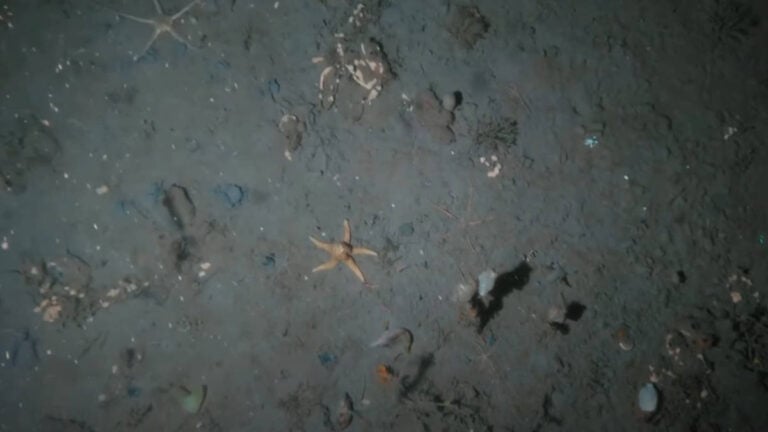
The team captured 62 hours of underwater video that shows what happens under the surface while cruise ships are anchored or drifting.
The video was filmed during 36 different underwater surveys taken throughout the Antarctic Peninsula, the Weddell Sea, the South Shetland Islands, and South Georgia Island using 4K deep-sea cameras.
Sadly, the study team found crushed sponge colonies and obvious damage to the sea floor where cruise ship anchors had touched – whereas they found thriving, healthy marine ecosystems in areas that had thus far been untouched by cruise ships.
The damage was particularly significant at Yankee Harbour in the South Shetland Islands, which is a popular landing site for expedition cruises and is famous for its Gentoo penguins.
Ship tracking data showed that eight cruise ships visited that port in just 2023, which damaged a combined 1,600 meters (or just under a mile) of seafloor with their anchors and from dragging anchor chains.
Unlike more resilient ecosystems around the world, Antarctic marine life grows extremely slowly, and it could take more than 100 years for impacted areas to recover from anchor damage (and it might not fully recover at all).
How Can Antarctic Marine Life be Protected?
As Antarctica becomes an increasingly popular cruising destination, something will need to change in order to allow the cruise lines and marine ecosystems to exist in harmony.
The 2022-2023 season welcomed more than 70,000 cruise passengers – which was already a record – and an estimated 123,000 cruisers sailed to the icy shores during the 2023-2024 season. Final numbers have not been confirmed publicly yet for the 2024-2025 season.
Usually, small cruise ships are much more likely to sail to Antarctica, as the International Association of Antarctica Tour Operators (IAATO) only allows vessels with 500 passengers onboard or less to make landings.
As part of these guidelines, no more than 100 guests can go ashore at one time – a rule which is meant to limit the environmental impact.
Bigger cruise ships from Royal Caribbean and Princess Cruises have been known to sail to Antarctica on occasion – with Majestic Princess sailing to the polar region for the 2026-2027 season.
That said, larger vessels usually offer scenic experiences only and cannot allow guests to go ashore because of their higher capacity.
Read Also: How Big Is the Cruise Ship Anchor?
Antarctica is undeveloped and does not have established cruise ports with piers, which means that even small ships have to rely on dropping anchor (and sometimes tendering) in order to allow guests to go ashore.
Thankfully, the researchers behind this new study had a solution for that as well. First, they suggested establishing permanent mooring zones at the most frequently visited destinations, creating areas where anchoring is permitted without doing too much harm.
In exchange, they would prohibit anchoring entirely from areas with particularly vulnerable marine habitats, which would be identified through further research.
Finally, most modern cruise ships have technology called dynamic positioning that allows them to stay in place without anchoring, which they hope could be used in place of anchoring more often going forward.
Cruise Ship Anchors are Destroying Antarctica’s Seabed Ecosystems